


Fast Shipping
Carrier information

20k products
Payment methods

24/7 Support
Unlimited help desk

2-day Delivery
Track or off orders
Material-specific tooling — every oscillating knife, creasing wheel and vacuum zone is matched to your board grade and flute profile before the machine ships.
Technical Specifications
| Parameter | Value |
|---|---|
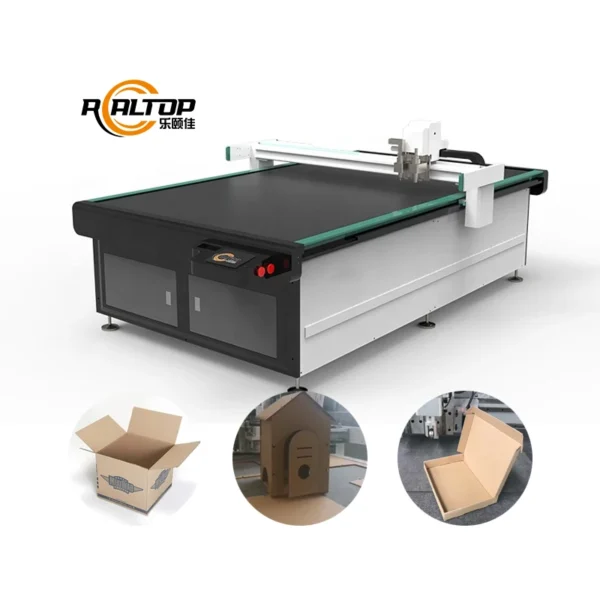
| Model | RT–R2513 / RT-D2516 / RT-S2516 |
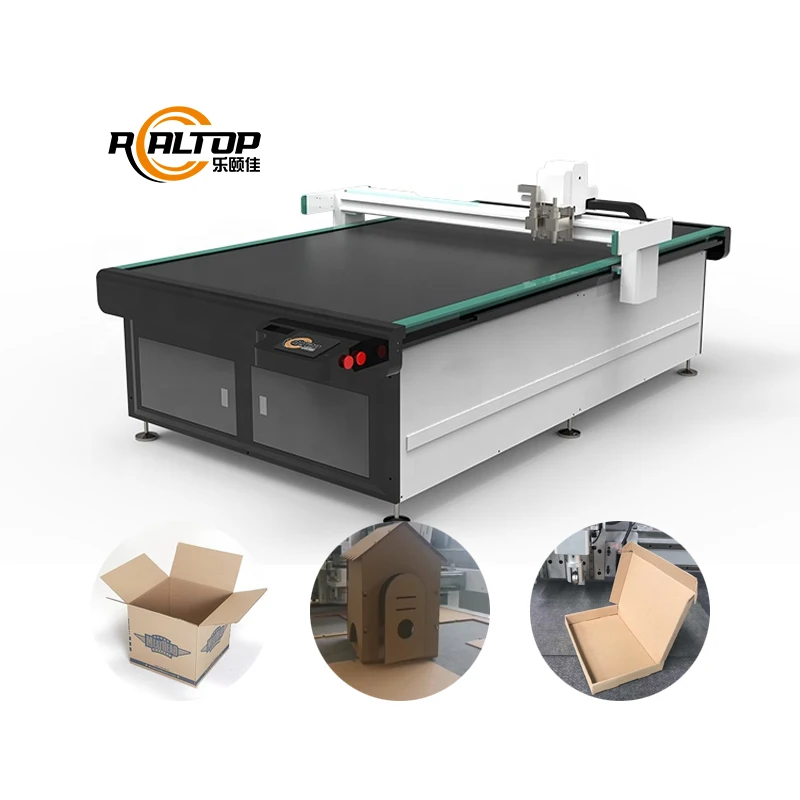
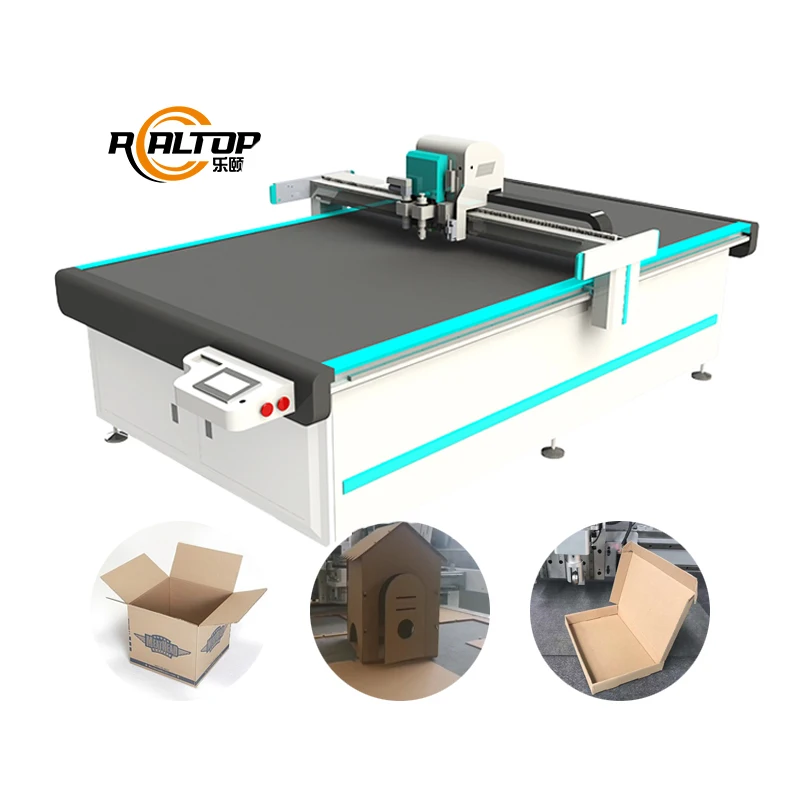
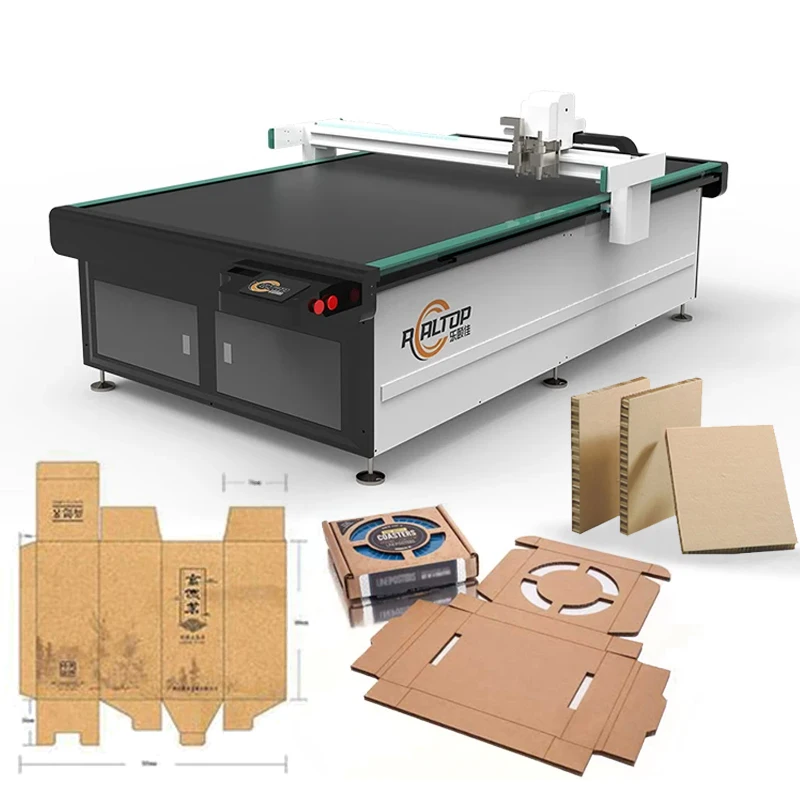
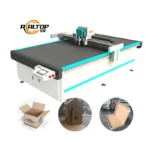
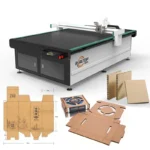
| Product Type | CNC Oscillating Knife Cutting Machine |
| Working Area | 2500×1300 mm (RT–R2513); 1600×2500 mm (RT-D2516 / RT-S2516) |
| Machine Size | 3550×1910×1400 mm (RT–R2513); 3450×2300×1250 mm (RT-D2516 / RT-S2516) |
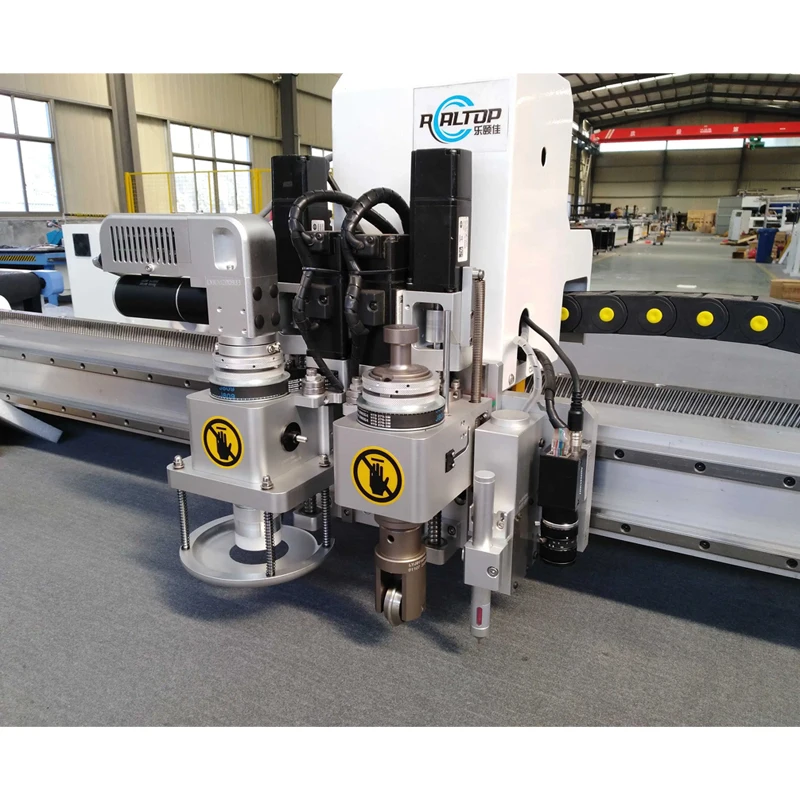
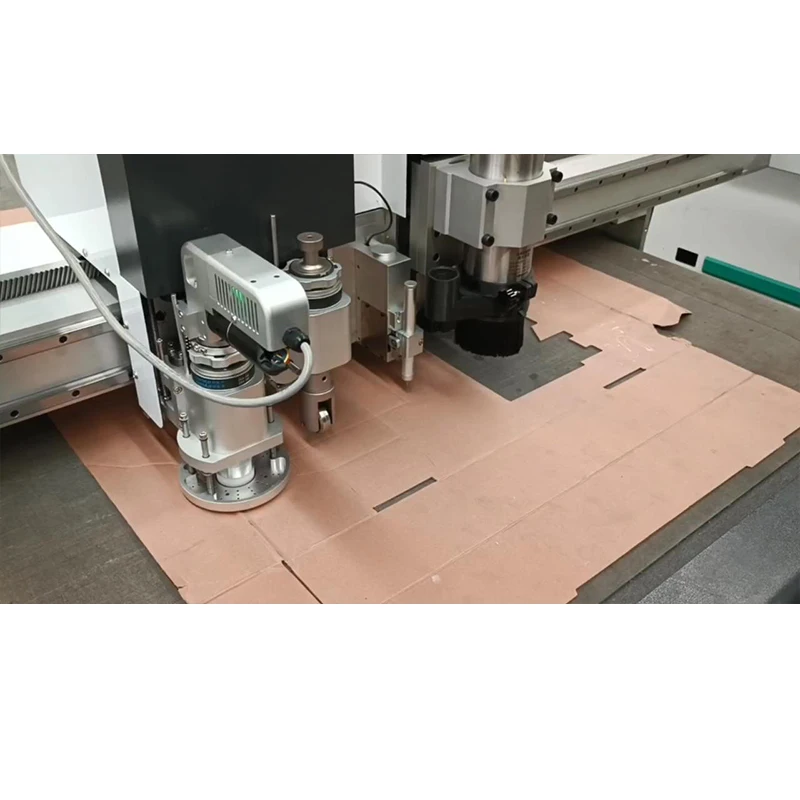
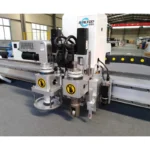
| Cutting Tools | Oscillating knife, creasing tool, kiss-cut knife, round punch |
| Maximum Cutting Thickness | ≤18 mm |
| Compatible Materials | Leather, labels, cardboard boxes, paper, stickers, PP paper |
| Fixing Method | Vacuum system with 7.5 kW vacuum pump |
| Vacuum Table | Aluminum alloy honeycomb structure adsorption platform |
| Felt Belt | Wear-resistant anti-pull composite fiber, tension strength increased by 35% |
| Rated Power | 9 kW |
| Voltage | 380 V |
| Guide Rail | Taiwan Hiwin linear square rail |
| Transmission | Ethernet port |
| Repeated Accuracy | <0.05 mm |
| Safety Devices | Infrared sensors, emergency stop |
| Profile Formats | DXF, OLT, PDF, AI |
| Software | Professional carton nesting software, customized language support |
| Language Options | English, Russian, Italian, Chinese, special languages customizable |
| Blade Supply | 10 oscillating blades included |
| Conveyor Belt | Germany imported conveyor belt (where configured) |
| Auto Feeding | Available (where configured) |
| Frame | Welded thick square seamless steel, high temperature treatment |
| Warranty | 1 year (excluding felt and blades) |
| Delivery Time | <30 working days |
| Standards | CE declaration where applicable |
Application Suitability
| Application | Material or Output |
|---|---|
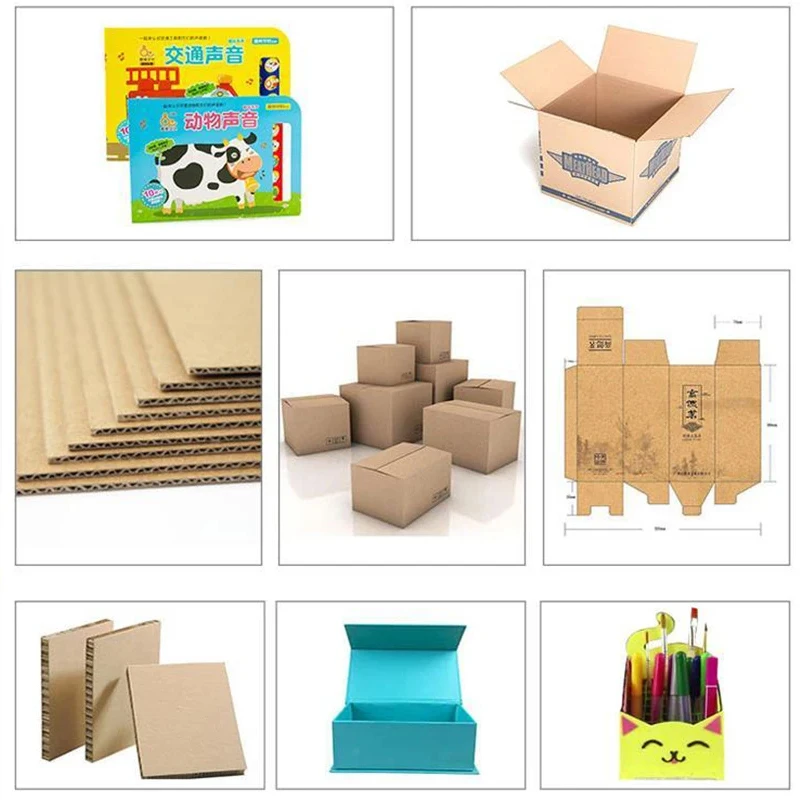
| Corrugated box prototyping and short-run production | Single, double and triple-wall corrugated board up to 18 mm |
| Folding carton sample making | Coated and uncoated cardboard, kraft liner |
| Express and snack food packaging carton cutting | E-flute and B-flute corrugated sheets |
| Gift box and premium packaging | Grey board, art paper, laminated stock |
| Sticker and label die-cutting | Self-adhesive vinyl, PP paper, label stock |
| Billboard and business card production | Card stock, PP sheet, lightweight board |
Why Edge Quality on Five-Layer Corrugated Depends on the Tool Head, Not the Price Tag
Specifying an oscillating knife cutting machine by working area alone is the fastest route to ragged edges and crushed flutes on heavy corrugated stock.
I have watched packaging lines stop for days because the machine was quoted for a 2500×1300 mm bed and nobody asked whether the buyer was running single-face or five-layer board. A single-layer oscillating knife handles standard B-flute without trouble, but the same head on triple-wall corrugated at 15 mm thickness will tear rather than slice, leaving fibres protruding from the cut face. The CNC oscillating knife cutting machine tool head selection process should start with the thickest material on the production schedule and work backward through flute type, grain direction and daily volume. [NEED_CITE: corrugated board flute profiles and thickness ranges]
Matching the Knife to the Board Grade
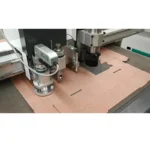
An oscillating knife head vibrating at high frequency cuts through corrugated flutes cleanly, but only when the blade angle and stroke match the material density. For single-wall board under 6 mm, a standard oscillating blade produces a sealed edge suitable for most carton applications. Once thickness moves past 10 mm into double and triple-wall territory*ns the tool head needs sufficient downward travel and rigidity. The RT–R2513 configuration supports cutting thickness up to 18 mm across its available tool heads, and the creasing tool runs alongside the knife to score fold lines in the same pass, eliminating a secondary operation.
Vacuum Zoning That Actually Holds Small Cartons
A honeycomb aluminum vacuum table paired with a 7.5 kW pump provides the holding force needed to keep corrugated sheets flat during cutting. However, large-format tables often lose suction on small nesting parts once the surrounding material is removed. Automatic zone following directs vacuum only to the area under the cutting path, which keeps small carton blanks and label shapes from lifting mid-cut. This matters especially when running sticker and label jobs where individual pieces may be only a few centimetres across. [NEED_CITE: vacuum table zoning and material hold-down in flatbed cutting]
Reading the Specification Sheet Beyond Working Area
The RT–R2513, RT-D2516 and RT-S2516 models span two working area formats, but the meaningful differences sit in the tool head list and drive components. Taiwan Hiwin linear rails paired with rack transmission maintain repeated accuracy below 0.05 mm across the full bed, which keeps kiss-cut depths consistent on label stock where the blade must cut the face material without scoring the backing paper. The 9 kW rated power covers the oscillating knife motor, vacuum pump and servo drives simultaneously without tripping at peak load. Ethernet-based transmission allows file transfer from the nesting software to the controller without relying on USB drives in a production environment where operators may be sharing design files across a network.
The Cost of Guessing the Configuration Wrong
Choosing a drag knife instead of an oscillating knife on double-wall corrugated produces a crushed rather than cut edge, and the material compresses under lateral blade pressure instead of parting cleanly. When the vacuum zones are not matched to the nesting layout, small carton blanks lift off the table, the blade catches, and the part is scrapped along with the surrounding sheet. On sticker runs, inadequate vacuum causes the release liner to wrinkle, and the kiss-cut depth varies across the sheet, leaving labels either half-cut or scored through. These failures do not show up in the factory acceptance test if the test is run on sample material that differs from actual production stock. [NEED_CITE: flatbed cutting waste rates from incorrect tool head selection]
What This Purchase Includes Beyond the Machine Frame
The tool head and table configuration is specified per your material type, thickness and production volume before the order is confirmed. Sample cutting on your own corrugated board, label stock or cardboard runs before commitment, so edge quality and cutting depth are verified on the actual production material. CCD camera positioning is available for printed contour work on packaging where cut lines must follow pre-printed marks. Software compatibility with your existing DXF, PDF, AI or OLT file workflows is confirmed before shipment. Voltage, plug type and control panel language are customised to your destination market so the machine runs on arrival without transformer or rewiring delays.
Documentation & Verification
- Machine specification sheet listing confirmed tool heads and vacuum zone layout
- Electrical schematic with voltage and frequency matching your facility supply
- Sample cutting report on your corrugated board grade with measured edge quality
- Tool head and table configuration list signed against your material thickness range
- Software licence and file format compatibility note for DXF, OLT, PDF, AI workflows
- Factory test record showing repeated accuracy across the full working area
Installation, Commissioning & Support
- Foundation must support the RT–R2513 at 3550×1910 mm footprint on level concrete
- Dedicated 380 V three-phase circuit with rated capacity above 9 kW required at point of connection
- Machine ships with vacuum table and frame assembled; felt belt and tool heads fitted on site
- First-run calibration sets oscillating knife depth against your specific board thickness range
- Operator training covers tool head changeover between creasing, kiss-cut and oscillating knife
- Ten oscillating blades supplied; replacement blades and felt belt available as consumable spares
What to Prepare Before Requesting a Quotation
Send the specific board grades, flute profiles and maximum thickness you run in production, along with typical sheet dimensions and daily volume. Confirm your facility voltage and frequency, the control panel language your operators need, and whether your design team exports files in DXF, AI, PDF or OLT format. If printed contour cutting is part of your workflow, share sample artwork so CCD recognition can be tested against your print registration marks before the configuration is locked.
Frequently Asked Questions
Q: How do I choose between oscillating knife and drag knife for corrugated box production?
A: Oscillating knife suits corrugated board above 3 mm where clean flute separation matters, while drag knife works for thin card and sticker kiss-cutting. The correct choice depends on your thickest production material. We specify the tool head after reviewing your board grade samples, not from the machine model alone.
Q: Will the CCD camera track printed registration marks at full production speed?
A: CCD contour recognition reads printed marks and adjusts the cut path in real time, but mark contrast, size and placement must meet minimum thresholds. We test your actual printed packaging artwork on the machine before shipment to confirm the camera locks onto your marks at running speed.
Q: Can the vacuum table hold small carton blanks without lifting during cutting?
A: The honeycomb aluminum table with automatic zone following concentrates suction under the active cutting area. This prevents small parts from shifting once surrounding material is removed. We verify hold-down performance during sample cutting on your specific nesting layout.
Q: Is the nesting software compatible with our existing design file formats?
A: The professional carton nesting software imports DXF, OLT, PDF and AI files directly. We confirm file compatibility and test your actual production layouts before order confirmation so your design workflow continues without file conversion steps.
Q: What voltage and language options are confirmed before the machine ships?
A: Voltage, plug type and control panel language are specified during order confirmation based on your destination market. Standard options include 380 V with English, Russian, Italian or Chinese interfaces, and special languages can be configured to match your operator requirements.


商品评价
Clear filtersThere are no reviews yet.