




Fast Shipping
Carrier information

20k products
Payment methods

24/7 Support
Unlimited help desk

2-day Delivery
Track or off orders
Tool-to-Material Matching — Every oscillating knife, creasing wheel and drag knife is specified against your actual packaging stock before the order is confirmed, eliminating ragged flutes and crushed foam on the shop floor.
Technical Specifications
| Parameter | Value |
|---|---|
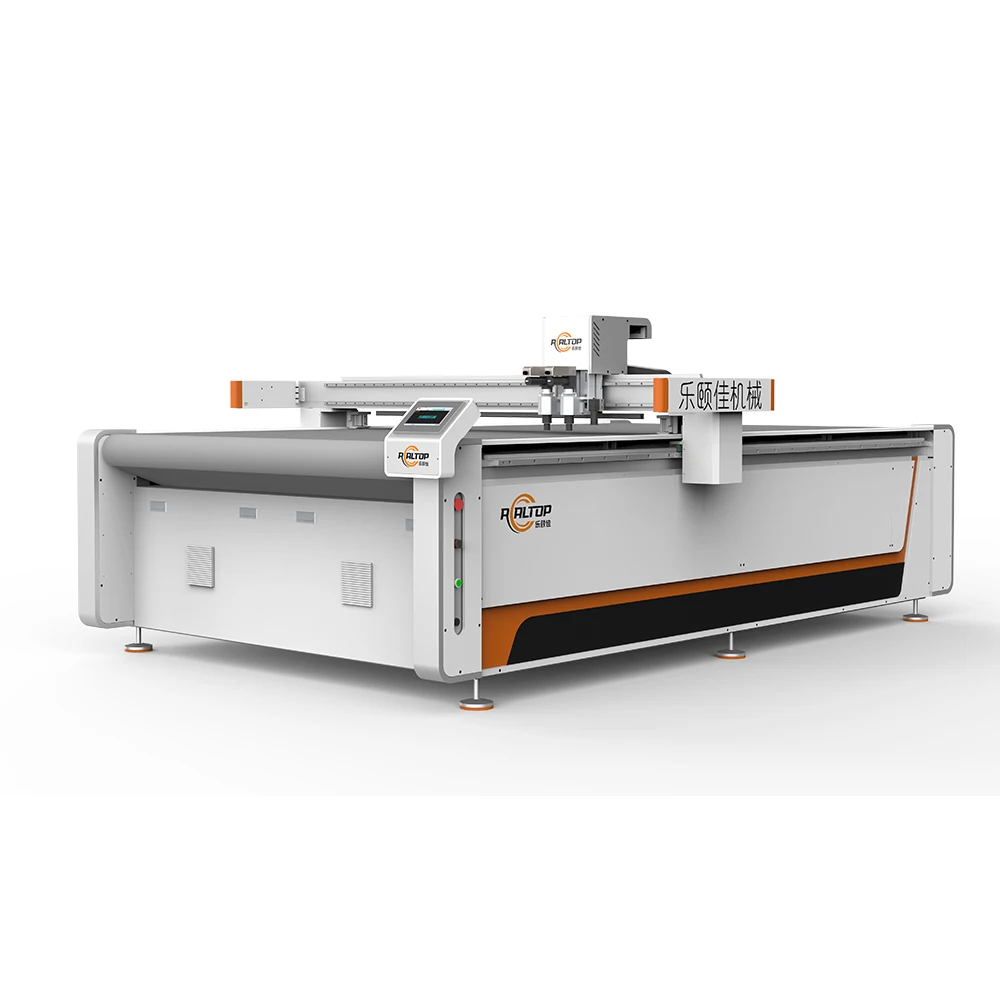
| Product Type | CNC Oscillating Knife Cutting Machine |
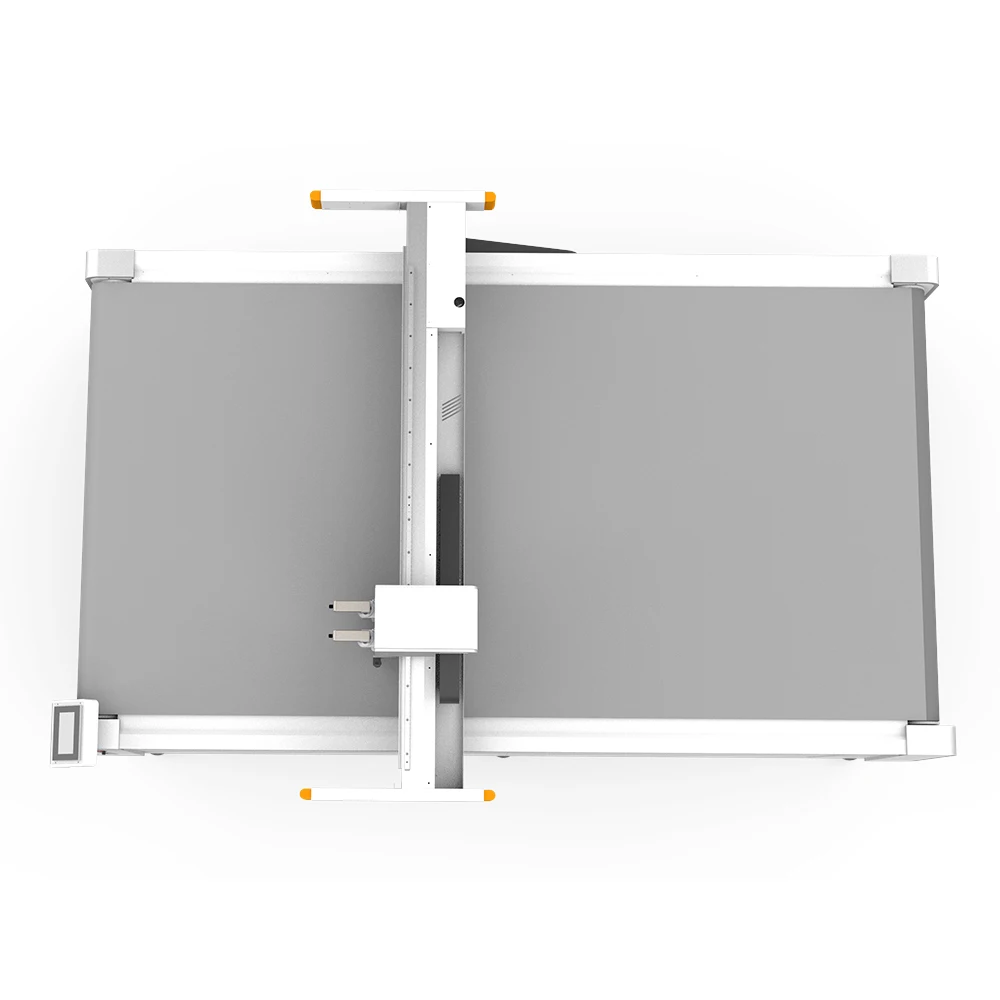
| Working Area | 1600 × 2500 mm |
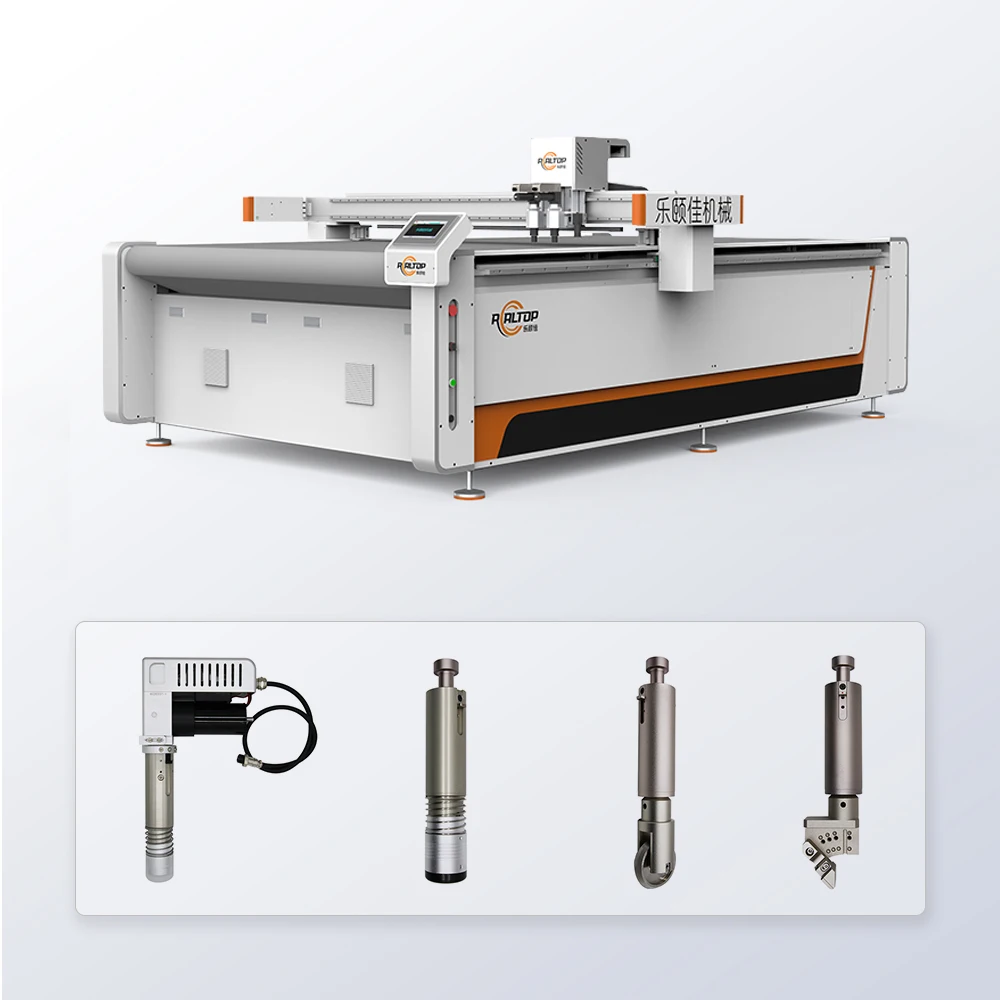
| Tool Head Options | Oscillating knife, Driven rotary knife, Creasing wheel, Kiss cutting tool, Pneumatic knife, Milling tool, V groove knife |
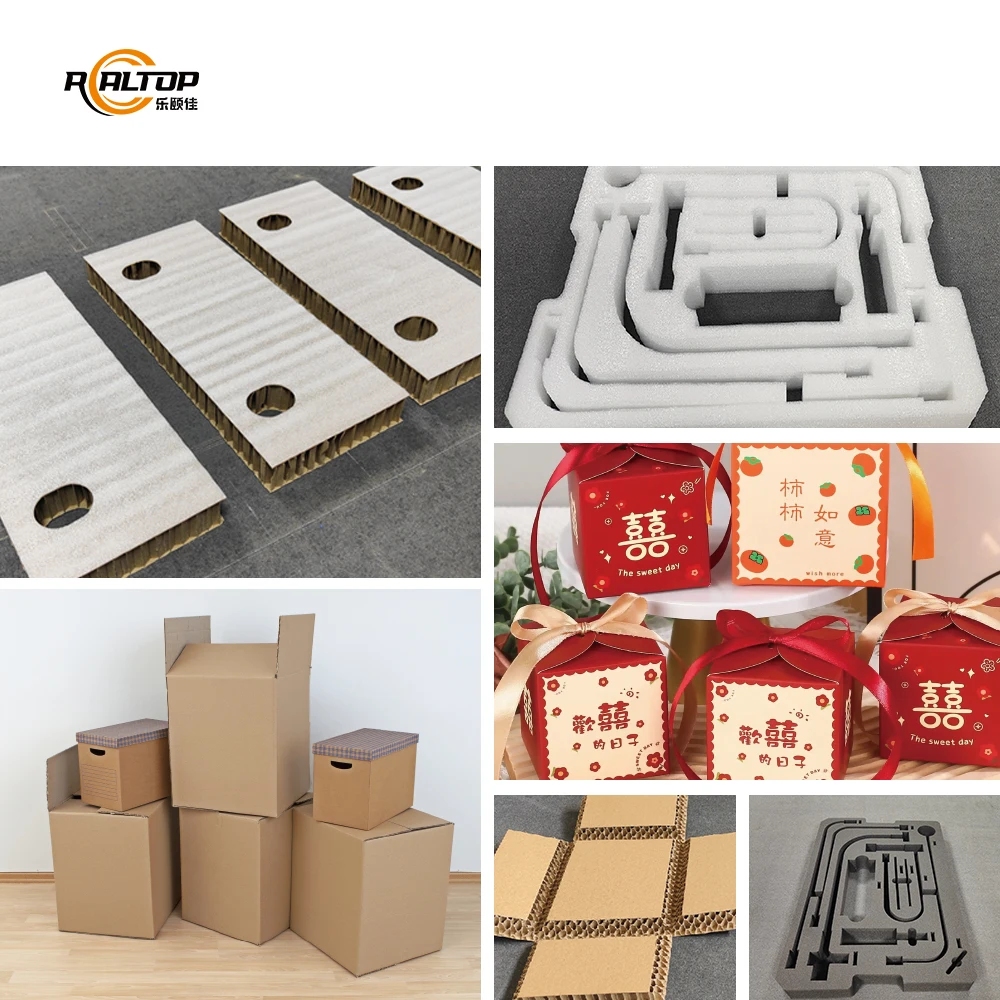
| Applicable Materials | Fabric, Cardboard, Carton, Mats, PVC, EVA, Leather, Acrylic, Foam, PTFE, Rubber |
| Cutting Speed | 0 – 1500 mm/s |
| Cutting Thickness | Up to 40 mm (basis not stated in source — confirm material type and density) |
| Cutting Accuracy | ±0.1 mm |
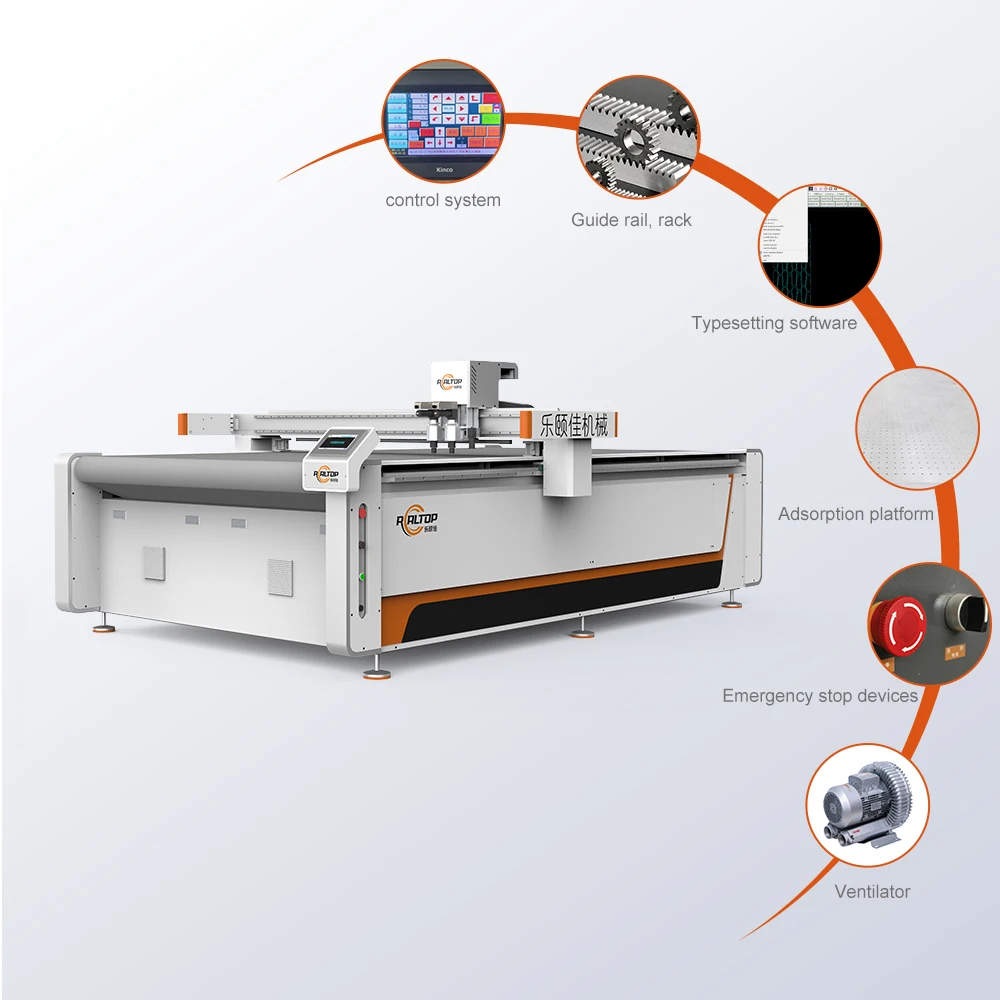
| Vacuum Pump Power | 9 kW |
| Voltage Options | 110V, 220V, 380V (frequency to be confirmed per destination market) |
| Control System | PLC control panel with dedicated packaging box structure design software |
| File Format Compatibility | PLT, DXF, AI, PDF |
| Safety Devices | Infrared sensor device, Emergency stop device |
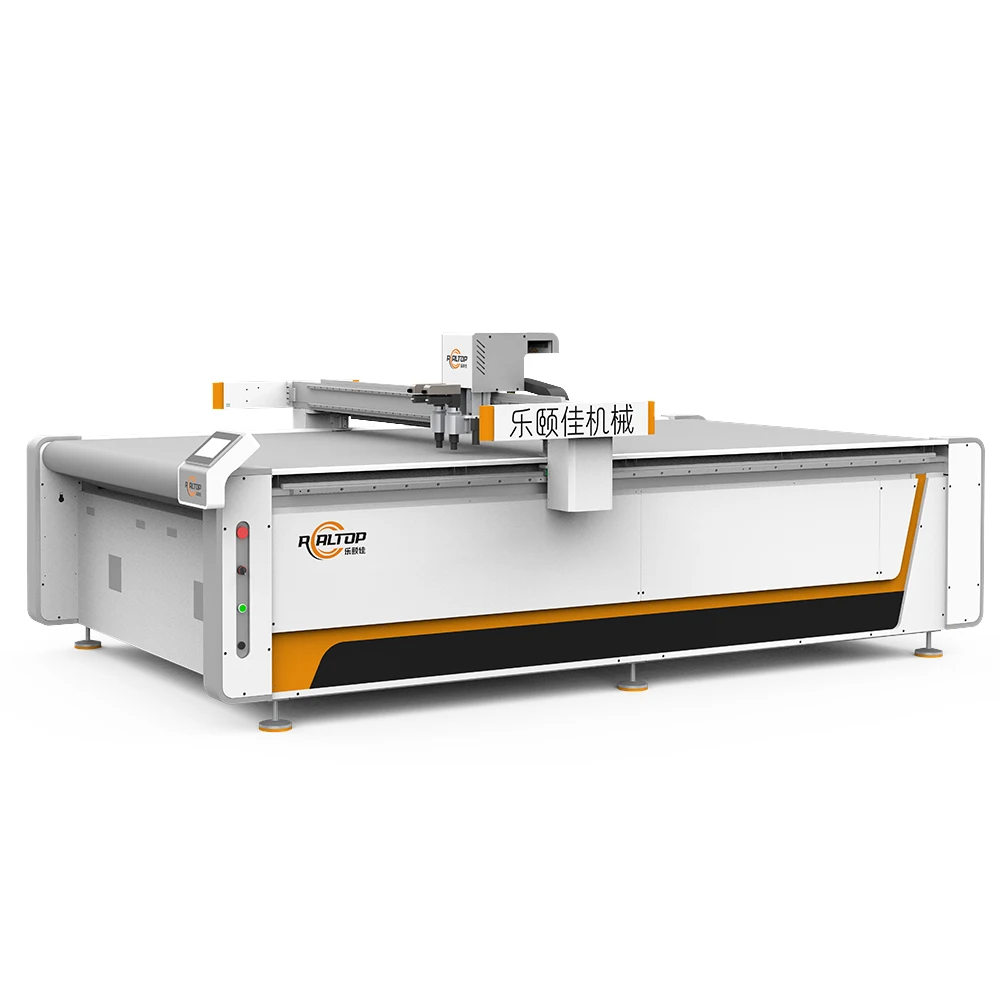
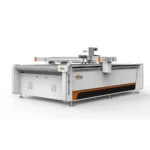
| Machine Dimensions (L × W × H) | 3300 × 2100 × 1350 mm |
| Servo Motor Options | Panasonic, Delta, Dorna (source value — verify against manufacturer catalog) |
| Vacuum Table | Aluminum bellows vacuum table |
| Machine Frame | Heavy-duty frame with precision-ground surface |
| Language Options | English, Russian, Italian, Chinese (custom languages available) |
| Assembly State | Fully assembled |
| Certification | CE (certificate copy to be verified) |
Application Suitability
| Application | Material or Output |
|---|---|
| Carton and corrugated sample making | E-flute, B-flute, BC-flute corrugated board, greyboard, cardstock |
| Foam insert fabrication for protective packaging | EVA, EPE, PU foam sheets |
| Short-run customized box prototyping | Art paper, specialty paper, adhesive-backed films |
| Signage and display component cutting | PVC sheets, PET thin plastic, composite boards |
| Interior lining and gasket production | Leather, synthetic leather, rubber mats, velvet, non-woven fabric |
Why the Right Knife Head Matters More Than Cutting Speed
A mismatched tool head on corrugated or foam stock causes more downtime than any spindle speed ever could.
When a packaging sample shop quotes a cutting table on working area alone, the knife selection often defaults to a general-purpose oscillating blade. On E-flute corrugated, that generic setup can crush the top liner instead of shearing it cleanly, and on adhesive-backed foam it pulls the substrate off the vacuum bed mid-cycle. I have seen packaging lines lose entire shifts chasing edge quality that should have been resolved at the specification stage. The CNC Oscillating Knife Cutting Table specifications must be locked to the actual material stack before a purchase order is signed [NEED_CITE: packaging material thickness and density influence on knife selection].
Knife Head Selection Across Packaging Substrates
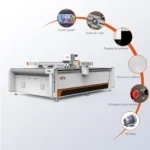
The tool head range on this CNC oscillating knife cutting table covers seven distinct cutting and creasing methods. An oscillating knife handles standard corrugated flutes and greyboard, while a driven rotary knife suits continuous fabric and non-woven rolls. A creasing wheel scores fold lines on carton stock without penetrating the bottom liner, and a kiss cutting tool slices through vinyl or adhesive film while leaving the backing intact. Pneumatic knives tackle denser EVA and PU foam blocks, a milling tool routs V-grooves for rigid composite display boards, and a V-groove knife produces clean mitre folds on thick carton.
Vacuum Table Zoning for Small Packaging Parts
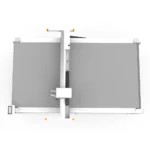
The aluminum bellows vacuum table delivers a flat, sealed surface that holds nested packaging blanks during high-speed traversal. The 9 kW vacuum pump generates enough suction to keep small die-free cutouts from lifting when the knife exits a corner. On short-run carton jobs where a single sheet yields dozens of small gussets and locking tabs, zoning the vacuum into independent sections prevents the uncut area from leaking air and losing grip [NEED_CITE: vacuum zoning effect on small-part retention during digital cutting].
Reading the Spec Sheet Beyond the Cutting Area
Working area is only the starting point. Cutting accuracy of ±0.1 mm ensures that registration marks on pre-printed carton stock remain within tolerance after a full 2500 mm traverse, which matters when box blanks must fold into precise locking mechanisms. The PLC control panel with dedicated packaging box structure design software imports PLT, DXF, AI and PDF files directly, so an existing library of carton templates transfers without manual re-drawing. Servo motor options span Panasonic, Delta and Dorna, each offering different torque curves that affect acceleration on dense foam versus lightweight cardstock.
The Hidden Cost of an Under-Specified Configuration
Ordering a cutting table without confirming the vacuum zoning layout often surfaces only when small packaging parts start shifting during the last pass of a nested sheet. By that point the machine is installed, the operator is trained, and re-commissioning the vacuum plumbing means days of lost sample output. I have watched packaging sample shops run entire corrugated jobs on a single-zone table, only to discover that the trailing edge of a 60 mm gusset lifts just enough to catch the oscillating knife and tear the flute. Correcting that after delivery involves retrofitting zone valves and re-sealing the bellows surface, work that should have been scoped before shipment [NEED_CITE: retrofit cost versus upfront specification of vacuum zoning].
Why Source This Cutting Table Here
An in-house design and production team covers both knife and laser technologies, so the cutting method is matched to your packaging material rather than forced into one process. Tool head and table configurations are specified per stock type and daily volume, documented in a configuration list that travels with the quotation. Sample cutting on your own corrugated, foam or adhesive film is completed and recorded before you commit, giving you a video and dimensional report to evaluate. Voltage, plug type and control language are confirmed against your destination market before the machine enters assembly, avoiding on-site rewiring. Software compatibility is verified against your existing DXF or AI nesting workflow, and a file format note ships with the documentation package.
Documentation & Verification
- Machine specification sheet listing every tool head and voltage option confirmed for your order
- Electrical schematic matched to destination frequency and plug type before dispatch
- Sample cutting report on your corrugated or foam stock with dimensional verification
- Tool head and table configuration list specifying which knife handles which material
- Software licence and file format compatibility note covering PLT, DXF, AI and PDF workflows
- Factory test record documenting cutting accuracy across the full 1600 × 2500 mm bed
Installation, Commissioning & Support
- Heavy-duty frame with precision-ground surface requires a level concrete floor able to support the 3300 × 2100 × 1350 mm footprint
- Dedicated electrical circuit matched to confirmed voltage option (110V, 220V or 380V) with correct frequency
- Machine arrives fully assembled, reducing on-site mechanical work to utility connections and bed levelling
- First-run parameter setup covers knife oscillation frequency, vacuum zoning map and servo tuning for your material
- Operator training includes tool head changeover, creasing wheel pressure adjustment and software nesting workflow
- Spare parts list covers oscillating knife blades, creasing wheels and vacuum seals for ongoing maintenance
What We Need to Specify Your Cutting Table
Send the material types you run most often, including flute designation for corrugated and density for foam, along with typical sheet dimensions and daily sample volume. Confirm your workshop voltage, frequency and preferred control language so the PLC and documentation are configured before assembly begins.
Frequently Asked Questions
Q: How is cutting thickness verified for my specific corrugated flute or foam density before order?
A: We run your actual stock on the cutting table and record blade penetration, edge condition and vacuum hold-down behaviour. The sample cutting report documents the knife type, oscillation frequency and pass count used, so you can review dimensional accuracy before the machine configuration is finalised.
Q: Which tool head should I specify for mixed-material packaging runs?
A: A typical mixed run across corrugated, foam inserts and adhesive film requires an oscillating knife, a pneumatic knife and a kiss cutting tool respectively. We list every recommended tool head against your material stack in the configuration document issued with the quotation.
Q: What vacuum table zoning is provided to prevent small packaging parts from lifting?
A: The aluminum bellows vacuum table can be divided into independent zones, each with its own valve. We map the zones to your most common nesting layout so that small carton tabs and gusset pieces remain flat throughout the cutting cycle.
Q: Does the software import my existing DXF and AI packaging templates?
A: The PLC control panel software accepts PLT, DXF, AI and PDF files. Before shipment we run your template library through the nesting workflow and provide a compatibility note confirming which file types import without manual adjustment.
Q: Which voltage, plug type and control language are confirmed before shipment?
A: Voltage is configurable across 110V, 220V and 380V with frequency matched to your destination market. Plug type and control panel language — from English, Russian, Italian and Chinese to custom options — are locked in during the specification stage and recorded on the electrical schematic.


商品评价
Clear filtersThere are no reviews yet.