








Fast Shipping
Carrier information

20k products
Payment methods

24/7 Support
Unlimited help desk

2-day Delivery
Track or off orders
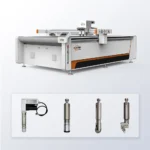
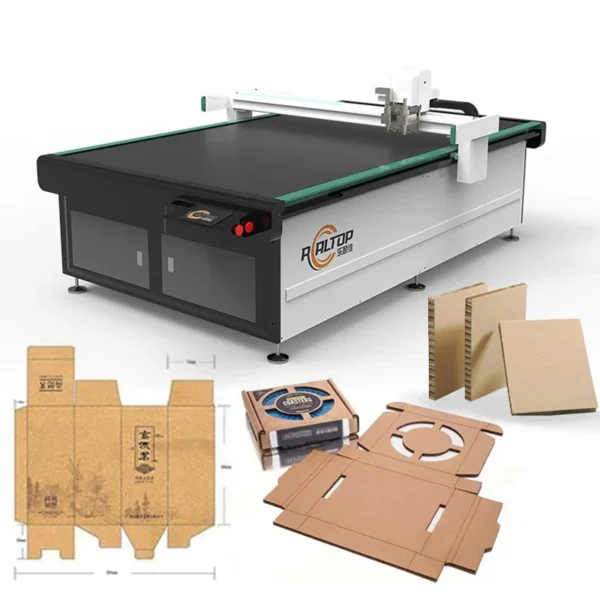
Swiss oscillating knife configuration — tool head and vacuum zoning matched to your corrugated grade and flute profile before the machine is built, not adapted after delivery.
Technical Specifications
| Parameter | Value |
|---|---|
| Model | RT-D2516/RT-S2516 |
| Product Type | CNC Oscillating Knife Cutting Machine |
| Working Area | 1600 × 2500 mm |
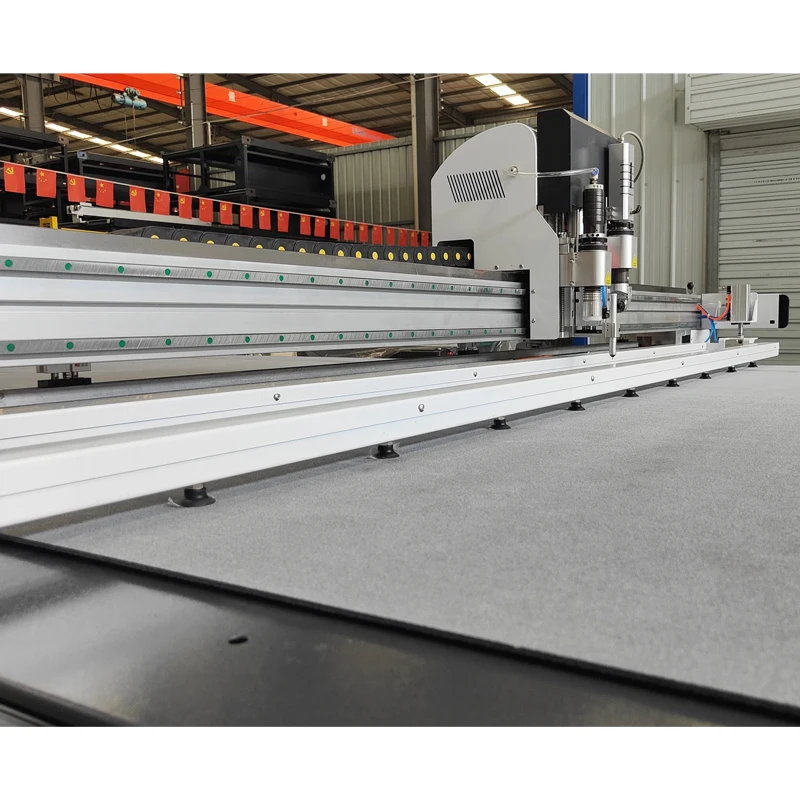
| Overall Dimensions | 3450 × 2300 × 1250 mm |
| Rated Power | 9 kW |
| Voltage | 380V ±10% |
| Control System | CNC, HP-GL compatible format |
| Multifunctional Head | Swiss imported knife with vibration full cutting, vibration half cutting, cursor location |
| Translational Velocity | 800–2000 mm/s |
| Cutting Speed | 200–800 mm/s (varies with material type and density) |
| Cutting Thickness | ≤100 mm (varies with material; basis not stated in source) |
| Repeated Accuracy | ≤0.1 mm |
| Transmission System | Digital servo motor, linear guide, synchronous belt, ball screw (Taiwan Hiwin rail) |
| Servo Motor | Taiwan Delta servo motors and drivers |
| Vacuum Table | Aluminum alloy honeycomb structure with auto-following cutting area adsorption |
| Vacuum Pump | 7.5 kW |
| Conveyor Belt | Germany imported conveyor belt |
| Auto Feeding | Included |
| Safety Device | Infrared sensors |
| Language Options | English, Russian, Italian, Chinese; special languages customizable |
| Software | Professional carton nesting software, multiple format file imports, automatic positioning for cutting/marking/creasing |
Application Suitability
| Application | Material or Output |
|---|---|
| Corrugated carton and pizza box sample making | Single, double and triple-wall corrugated board, kraft liner |
| Cardboard packaging prototyping | Grey board, folding carton stock, solid bleached sulfate |
| Sticker and label contour cutting | Vinyl, self-adhesive paper, printed sticker sheets |
| Advertising signage and display cutting | Foam board, PVC sheet, acrylic, corrugated plastic |
| Leather and footwear component cutting | Natural leather, PU synthetic, sponge composite leather |
| Gasket and industrial seal cutting | Rubber sheet, silicone, soft glass, non-asbestos fiber |
Why "Cutting Thickness ≤100 mm" Is Not the Whole Story
Actual cutting depth depends on material density, flute structure, and the tool head selected — not a single catalogue number.
I once watched a packaging line stall because the machine was ordered on working area alone, with the assumption that any corrugated grade up to the stated limit would cut cleanly. The board in production had a higher grammage than the sample used during testing, and the oscillating knife could not penetrate the liner without crushing the flute. Two days of parameter adjustment followed before the line stabilized. When evaluating CNC oscillating knife cutting table specifications, how to choose the right configuration starts with sending your actual production material to the factory for a test cut [NEED_CITE: material density and compressibility affect oscillating knife penetration depth].
Matching the Tool Head to the Board Grade
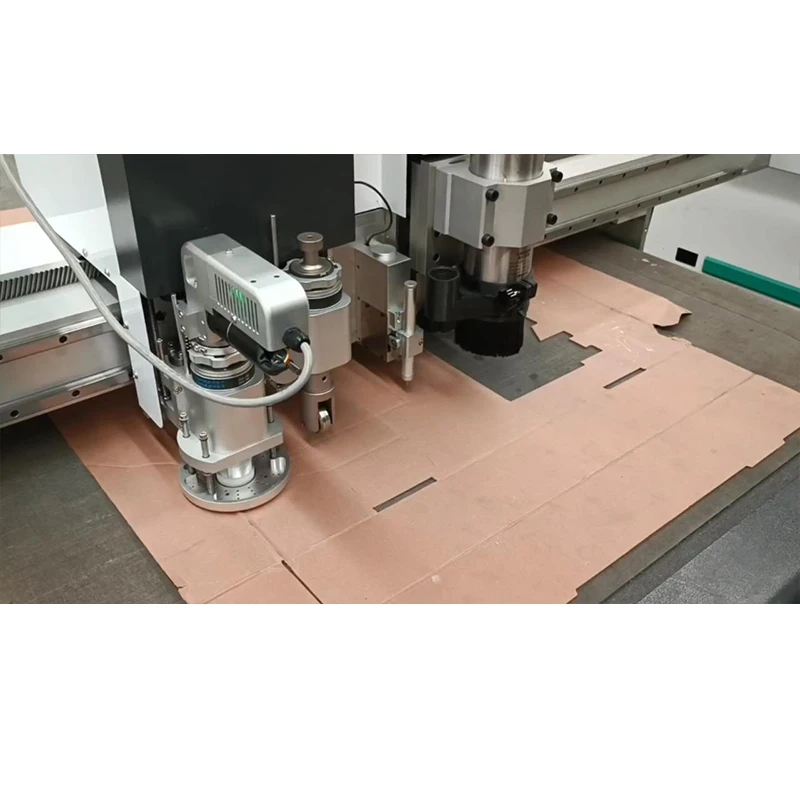
The RT-D2516/RT-S2516 ships with a Swiss imported multifunctional head that supports vibration full cutting, vibration half cutting and cursor location. For corrugated carton sample making, the oscillating knife handles flute profiles from B-flute through BC double-wall, while a creasing wheel — available as a configuration option — scores fold lines without fracturing the outer liner. Selecting the wrong tool for a given board weight produces ragged edges on the cut side and uncontrolled cracking along the crease.
Vacuum Zoning and Small-Part Stability
The aluminum alloy honeycomb vacuum table includes auto-following adsorption that activates only the zones under the current cutting path. This matters when nesting small packaging components such as locking tabs or ventilation cutouts, where full-table suction would lose grip on parts already separated from the skeleton. Before ordering, the nesting layout should be reviewed to confirm that the zone grid aligns with the smallest piece in the production file [NEED_CITE: vacuum zone mapping relative to minimum part footprint].
Reading the Specs That Actually Matter
The Taiwan Delta servo motors and Hiwin linear guides deliver repeated accuracy of ≤0.1 mm across the full 1600 × 2500 mm working area, which is critical when a carton design requires multiple crease-and-cut passes on the same sheet. The 7.5 kW vacuum pump provides the suction needed for dense double-wall board, but its effectiveness still depends on the seal between the material and the table surface — warped or pre-curled sheets may require additional edge clamping. Translational velocity reaches 800–2000 mm/s while cutting speed ranges from 200–800 mm/s depending on material resistance; these two figures should not be confused when estimating cycle time. The professional carton nesting software accepts multiple file formats and handles automatic positioning for cutting, marking and creasing, but the buyer’s existing file format and nesting workflow must be verified before the order is placed to avoid post-delivery incompatibility.
The Hidden Cost of Unconfirmed Configuration
When voltage, plug type and control language are not confirmed before shipment, the machine arrives with a 380V ±10% electrical package that may not match a workshop running on a different supply standard. Rewiring on site is expensive and may void the CE declaration if not done under factory supervision. Similarly, if the software license and file format compatibility note are not reviewed in advance, the operator may discover that their preferred nesting format requires a manual conversion step that slows the workflow [NEED_CITE: electrical standard mismatches in exported industrial machinery].
Why Source This Machine from Realtop
The design team covers both knife and laser cutting technologies, so the buyer can match the cutting method to the material rather than forcing one process to handle every substrate. Tool head and table configuration are specified per material and production volume, documented in a configuration list that accompanies the machine. CCD camera positioning is available for printed contour work on sticker and signage jobs. Software compatibility is confirmed against the buyer’s existing file format before order. Sample cutting on the buyer’s own material is standard practice, producing a cutting report that records edge quality, achievable thickness and recommended feed rate. Voltage, language and specification customization are built into the order process, not treated as afterthoughts.
Documentation & Verification
- Machine specification sheet listing confirmed tool head, vacuum zone map and voltage
- Electrical schematic and voltage confirmation matching target market supply standard
- Sample cutting report on buyer’s corrugated grade with edge and crease photographs
- Tool head and table configuration list documenting oscillating knife, creasing wheel and zone assignment
- Software license and file format compatibility note covering buyer’s nesting workflow
- Factory test record showing repeated accuracy measurement before dispatch
Installation, Commissioning & Support
- Foundation must support the 3450 × 2300 × 1250 mm footprint plus conveyor infeed clearance
- Dedicated 380V ±10% circuit with isolated ground, rated for the combined 9 kW machine and 7.5 kW vacuum pump load
- Machine ships with table and gantry separated; reassembly requires overhead lifting equipment
- First-run commissioning includes vacuum zone calibration against buyer’s confirmed nesting layout
- Operator training covers tool head changeover, crease pressure adjustment and software nesting import
- Spare parts list covers oscillating knife blades, creasing wheel inserts and vacuum seal strips
Before You Request a Quote
Send your actual corrugated board samples — including the heaviest grade in your production range — so the factory can run a cutting test and confirm tool head selection. Specify your local voltage, frequency and plug type, along with the control language your operators require. If you already use a nesting software or file format, provide a sample production file so compatibility can be verified against the included carton nesting package.
Frequently Asked Questions
Q: How is cutting thickness and speed determined for my specific material?
A: The stated ≤100 mm cutting capacity varies with material density and flute structure. Before any order is confirmed, your actual production material is test-cut on the RT-D2516/RT-S2516, and a sample cutting report documents the achievable depth, edge quality and recommended feed rate for your specific board grade.
Q: Which tool head configuration is recommended for corrugated carton work?
A: For corrugated board, the Swiss imported oscillating knife handles full and half cutting through flute profiles up to double-wall. A creasing wheel is added to the head for fold-line scoring. The final configuration is documented in the tool head list provided before shipment.
Q: Is CCD camera contour recognition included for printed sticker cutting?
A: CCD camera positioning is available as a configuration option on this platform. Its ability to track printed registration marks at your required production speed is verified during the sample cutting stage using your actual printed artwork file.
Q: What voltage and control language will my machine be configured for?
A: The standard quote is 380V ±10%, but target market voltage, plug type and frequency must be confirmed before production begins. Control language options include English, Russian, Italian and Chinese, with other languages available by customization.
Q: Will the included software work with my existing nesting files?
A: The professional carton nesting software supports multiple format file imports and handles cutting, marking and creasing positioning. Your current file format and nesting workflow are checked for compatibility before the order is finalized, and a format compatibility note is included in the documentation package.


商品评价
Clear filtersThere are no reviews yet.