





Fast Shipping
Carrier information

20k products
Payment methods

24/7 Support
Unlimited help desk

2-day Delivery
Track or off orders
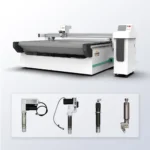
Tool Head Matched to Material — Every 1625 CNC oscillating knife cutting machine is configured with specific knife, wheel and milling heads after sample cutting on the buyer’s actual fabric, foam or composite, never forced into a single setup.
Technical Specifications
| Parameter | Value |
|---|---|
| Model | 1625 |
| Product Type | CNC Oscillating Knife Cutting Machine |
| Working Area | 1600×2500 mm |
| Tool Head Options | Oscillating knife, Driven rotary knife, Creasing wheel, Kiss cutting tool, Pneumatic knife, Milling tool, V groove knife |
| Cutting Thickness | ≤ 30mm (basis not stated in source — confirm material type and density) |
| Cutting Speed | 0–2000 mm/s |
| Positioning Accuracy | ±0.1 mm |
| Vacuum Table Type | Aluminum bellows vacuum table |
| Vacuum Pump Power | 9 kW |
| Servo Motor Options | Panasonic, Delta, Dorna (rated or peak not specified in source) |
| Voltage Options | 110V, 220V, 380V |
| Control System | PLC control panel with optional display languages |
| Software File Formats | PLT, DXF, AI, PDF |
| Safety Device | Infrared sensor device and emergency stop device |
| Machine Dimensions (L×W×H) | 3300×2100×1350 mm |
| Packaging Design Software | Dedicated packaging box structure design software included |
| Standards | CE |
Application Suitability
| Application | Material or Output |
|---|---|
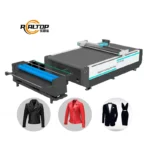
| Apparel Manufacturing | Suits, knitwear, lace, complex woven and patterned fabrics requiring nested layout |
| Automotive Interior | Seat fabrics, carpets, PVC mats, and sound deadening composites needing burr-free edges |
| Home Textiles | Sofa fabrics, curtains, rugs, and multi-layer textile lays |
| Composite Processing | Carbon fiber prepreg, aramid weaves, and specialty reinforcement materials |
| Signage and Packaging | PVC sheets, corrugated cardboard, carton samples, and flexible magnetic vinyl |
| Footwear and Leather Goods | Natural and synthetic leather, EVA midsoles, and foam insole layers |
Why the Tool Head Matters More Than the Working Area
Choosing a CNC oscillating knife cutting machine based on table size alone is a common purchasing mistake that leads to material waste and rejected batches.
A buyer specifies a 1600×2500 mm bed, signs the contract, and the machine arrives. Then they load a 15 mm high-density EVA foam, start the cycle, and watch the standard oscillating knife tear through the top layer while crushing the bottom. The edges are ragged, the dimensions drift, and the entire lay has to be scrapped. [NEED_CITE: material deformation and edge quality standards in flexible material cutting] The working area was correct; the tool head was not. This machine offers seven different tool heads — oscillating knife, driven rotary knife, creasing wheel, kiss cutting tool, pneumatic knife, milling tool, and V groove knife — each engineered for a different material behavior. The right head applies force in the direction the material can accept it, rather than forcing every substrate through a single blade geometry.
Oscillating Knife Versus Driven Rotary for Textile Lays
For multi-layer fabric cutting in garment production, the oscillating knife delivers a vertical vibration that slices through stacked plies without dragging or shifting the bottom layers. The driven rotary knife, by contrast, works better on single-ply woven materials where a continuous rotational cut produces a cleaner selvedge. Selecting between them depends on lay height, fabric weave density, and whether the pattern pieces require sharp internal corners. A CNC oscillating knife cutting machine configured with both heads lets a production floor switch between bulk multi-layer runs and single-ply sample work without changing machines.
Vacuum Zoning and Small Part Stability
The 9 kW vacuum pump feeds an aluminum bellows vacuum table with full-surface adsorption, but the critical detail is how the table is zoned. Small pattern pieces — collar stays, belt loops, gasket inserts — cover only a fraction of the table surface, leaving uncovered zones open to air leakage. [NEED_CITE: vacuum table zoning principles for small part retention] When zoning is insufficient, the vacuum pressure drops at the cutting edge and thin materials lift into the knife path. The 1625 table configuration addresses this by dividing the surface into independently controlled zones, so vacuum is concentrated directly beneath the active cutting area regardless of part size.
Reading the Specification Sheet Against Your Material
The ±0.1 mm positioning accuracy ensures that nested pattern pieces hold their dimensions across a full 1600×2500 mm lay, which matters when garment panels must align at the seam without secondary trimming. Cutting speed reaches 0–2000 mm/s, but the achievable speed on any given job depends on material density and knife penetration depth — cutting 30 mm foam requires slower travel than slicing 2 mm vinyl. The PLC control panel accepts PLT, DXF, AI and PDF file formats, which eliminates the file conversion bottleneck that often stalls integration with existing nesting software. Voltage options span 110V, 220V and 380V, and confirming the correct supply before production prevents motor overheating on arrival. [NEED_CITE: industrial voltage and frequency compatibility for export machinery]
The Cost of Skipping the Sample Cut
I once configured a machine for a client who insisted on standard oscillating knife tooling for a 20 mm composite panel. The sample cut on our standard foam looked fine, but their production material had a fiberglass reinforcement layer that dulled the blade within the first sheet. Every subsequent cut left delaminated edges and exposed fibers. We swapped to a pneumatic knife with higher downward force, and the edge quality returned — but that swap cost them a week of production and a batch of ruined material. This is why every order on this machine starts with a sample cutting report run on the buyer’s actual material, documenting edge condition, achievable thickness, and the specific tool head required.
Why Source This Configuration Here
In-house design covers both the knife tooling and the vacuum table engineering, which means the tool head selection and the table zoning are developed together rather than sourced from separate suppliers and bolted on afterward. The aluminum bellows table and the seven tool head options are specified as a system, not as isolated line items. Software compatibility — PLT, DXF, AI, PDF import and nesting workflow — is confirmed before the order is locked, not discovered during installation. Voltage, plug type, and control panel language are verified against the buyer’s facility supply before the machine enters production. [NEED_CITE: CE machinery directive compliance for CNC cutting equipment] The dedicated packaging design software is included with the system, allowing carton and sample producers to design and cut structural prototypes on the same table used for production runs.
Documentation & Verification
- Machine specification sheet listing all seven tool head options and their material assignments
- Electrical schematic with voltage and frequency confirmed against buyer facility supply
- Sample cutting report on buyer’s own material documenting edge quality and knife selection
- Tool head and vacuum table configuration list specifying zone layout and pump rating
- Software licence and file format compatibility note for PLT, DXF, AI and PDF workflows
- Factory test record with positioning accuracy verification before dispatch
Installation, Commissioning & Support
- 3300×2100×1350 mm footprint requires level concrete floor with clearance for material loading on both long sides
- 9 kW vacuum pump and servo motors require dedicated circuit matching confirmed 110V, 220V or 380V supply
- Machine ships partially assembled; gantry and tool head carriage are aligned and calibrated on site
- PLC control panel language set to operator preference during commissioning before training begins
- Infrared sensor and emergency stop circuits tested with operator present before first production cycle
- Spare knife blades and wear parts list provided based on buyer’s confirmed material type and daily volume
What to Include With Your Inquiry
Send the specific material type, thickness, and sheet dimensions you plan to cut, along with your daily volume target. Include your facility voltage and frequency, preferred control panel language, and the file formats your design team currently uses. If you have an existing nesting workflow or upstream design software, note that so file compatibility can be confirmed before quotation.
Frequently Asked Questions
Q: How do I choose the correct tool head for my material type and thickness?
A: The seven available tool heads each address a different material behavior. Oscillating knife suits multi-layer textile lays, driven rotary handles single-ply wovens, pneumatic knife applies higher downward force for dense composites, and kiss cutting tool scores without penetrating the backing. The correct choice is determined by running a sample cut on your actual material and documenting the edge result before the machine is configured.
Q: How is the vacuum table zoned to hold small parts during cutting?
A: The aluminum bellows vacuum table is divided into independently controlled zones so that suction concentrates beneath the active cutting area. This prevents pressure loss when small pattern pieces cover only a fraction of the table surface, eliminating material lift and edge drift that would otherwise require secondary trimming.
Q: Can the system track printed contour marks at production speed?
A: CCD camera contour recognition is available as a configuration option for printed material work. The system reads registration marks and adjusts the cutting path in real time to compensate for print distortion or stretch. Compatibility with your specific print mark size and contrast ratio is confirmed during the sample cutting stage.
Q: What voltage and control language options are confirmed before shipment?
A: Voltage options include 110V, 220V and 380V, and the correct supply is matched to your facility specifications before production begins. The PLC control panel language is set to your operator preference, and the electrical schematic is included in the documentation package so your local electrician can verify the connection on arrival.
Q: How do I verify the cutting thickness on my specific material before committing?
A: A sample cutting report is produced on your own material before the order is finalized. This report documents the tool head used, the achieved edge quality, the maximum clean cutting depth, and any material-specific adjustments required. You review and approve the sample result before the machine configuration is locked for production.


商品评价
Clear filtersThere are no reviews yet.